







How to Soundproof a Room: The Complete DIY Guide
Soundproofing Guide
Stop the noise.
Use the right material.
Most people buy foam panels for a noise problem. Foam does not block sound. This guide covers what actually works and why.
Soundproofing vs sound absorption
These two terms describe opposite problems. Confusing them is the most expensive mistake in DIY acoustics.
Soundproofing (blocking)
Problem: you can hear noise from another room, the street, or the flat above.
Goal: stop sound passing through a wall, door, floor or ceiling.
Material: Mass Loaded Vinyl, dense barriers, acoustic sealant.
Measured in: STC. Higher is better.
Sound absorption (treating)
Problem: your room echoes, voices sound harsh, recordings sound boxy.
Goal: reduce reflections inside the room.
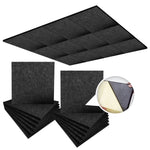
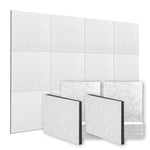
Material: acoustic foam, felt panels, bass traps, fabric.
Measured in: NRC. Higher is better.
The four things that actually block sound
DIY projects usually only need principles 1 and 4. Everything else is a bonus.
1Mass
Heavy, dense material resists being vibrated by sound. This is why a brick wall blocks more than a hollow door. Mass Loaded Vinyl adds mass without adding much thickness.
2Decoupling
Separating two surfaces so vibration cannot travel directly between them. Resilient channels and staggered studs do this. Usually a construction-stage decision.
3Damping
Converting vibration energy into heat, typically with a compound between two rigid layers. A damping compound between two sheets of drywall is the standard example.
4Sealing
Sound travels through air. A 1% gap around a door can undo most of the benefit of a heavy wall. Gaps around outlets and at skirting boards are the cheapest wins available.
What to do in each space
Expand each situation for a step-by-step approach.
Shared apartment wall
Neighbour noise through a party wall is the hardest DIY problem because you cannot open up their side.
- Seal every gap: skirting boards, electrical outlets, where wall meets ceiling and floor. Use acoustic sealant, not standard filler. Fit putty pads behind outlet boxes on shared walls.
- Add mass with MLV fixed directly to the wall surface, overlapping seams and taping them.
- If you can lose 30-40mm of depth, add a layer of drywall over the MLV. Mass plus a rigid layer performs considerably better than MLV alone.
- For walls with cavity access, fill with mineral wool insulation before closing up.
- Add absorption panels on top if the room also echoes. This is a comfort improvement, not a blocking one.
Expect meaningful reduction in speech and TV noise. Deep bass from a subwoofer will remain audible.
Doors
Doors are usually the weakest point in any room. Hollow-core interior doors have almost no mass, and the gap around the frame leaks sound freely.
- Fit weatherstrip around the frame and a sweep at the bottom. Do this first.
- Fix MLV to the door face. On a hollow-core door this makes a large relative difference.
- For a stronger result, sandwich MLV between the door and a thin MDF panel.
- Replacing a hollow-core door with a solid-core door beats any treatment you can apply to a hollow one.
Home studio or recording space
Studios need both jobs done, and in this order:
- Block first. MLV on walls, sealed door, treated window. If outside noise reaches the mic, no amount of absorption will remove it from the recording.
- Then absorb. Acoustic foam at first-reflection points, bass traps in corners. This is what makes recordings sound clean and professional.
For podcasters and voiceover artists who need a quick portable solution, a vocal isolation booth is a practical alternative to full room treatment.
Cars and vehicles
Road and engine noise enters through thin, resonant sheet metal. Treatment has two steps: damping the panel so it stops ringing, then adding a mass barrier.
- Apply a butyl-based sound deadener to door skins, floor pan, boot and roof. 25-50% coverage per panel is enough to stop resonance.
- Add MLV over the top on the floor and firewall for airborne road noise.
- Alternatively, an aluminum foil insulation mat combines heat and sound deadening in one layer.
- Cut materials with scissors or a utility knife and fit around trim and wiring.
Ceilings and floors
Footsteps from above are impact noise, which behaves differently from airborne noise. Mass helps, but decoupling and soft surfaces help more.
- Under flooring: MLV as an underlayment beneath laminate or engineered wood reduces impact transmission to the room below.
- Ceilings: acoustic ceiling panels reduce echo and improve the quality of sound inside the room.
- For airborne noise through the ceiling, MLV fixed overhead then covered with drywall is the most effective non-construction approach.
- Rugs with thick underlay on the floor above are more effective per dollar than anything you can do from below.
Which product for which job
Match your problem to the right solution.
Neighbours through walls
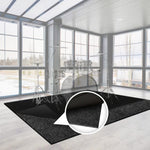
MLV Roll
Cut-your-own 1m x 1m roll. Best for large continuous areas, behind drywall, and vehicle floors.
Shop MLV RollSpot treatment, small areas
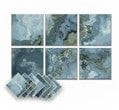
MLV Tiles
Pre-cut 12 x 12 in tiles. Best for window recesses, behind TVs, modular wall coverage.
Shop MLV TilesWall cavity insulation
Mineral Wool
Dense fibre insulation for filling wall and ceiling cavities. Absorbs sound energy inside the wall structure.
Shop Mineral WoolCars and vehicles
Aluminum Foil Mat
Heat and sound deadening in one layer. Fits door panels, floor pan and boot.
Shop Foil MatPodcasts, vocals, recording
Vocal Isolation Booth
Portable recording booth that reduces external noise for podcasts, singing and voiceovers.
Shop Isolation BoothRoom echo, recording quality
Acoustic Foam Panels
For reducing reflections and reverberation inside your room. Not for blocking neighbour noise.
Shop Foam PanelsDoor gaps and draughts
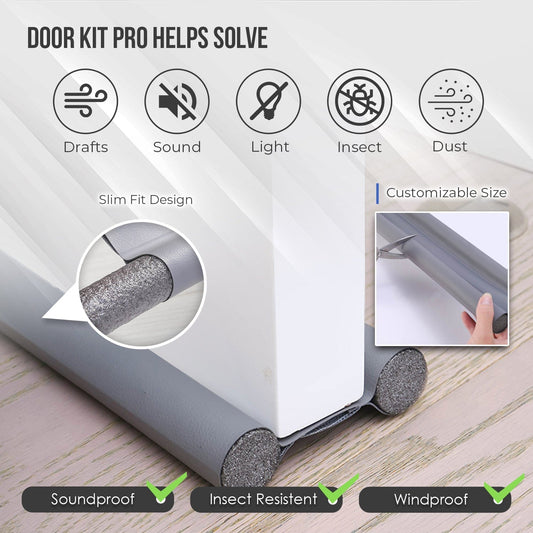
Door Kit
Everything you need to seal and treat a door in one kit. Weather strip, sweep and barrier.
Shop Door KitNot sure how much you need
Free Tiles Calculator
Enter your room dimensions and get a precise quantity estimate before you buy.
Use CalculatorArrowzoom MLV — transmission loss
Engineering estimates for KK1146 roll and KK1246 tiles. Both share identical surface weight and material composition.
Transmission Loss vs Frequency
KK1146 / KK1246 — 2 lb/ft² — Internal engineering estimate AZ-MLV-INT-REV01
| Material / SKU | 125 | 250 | 500 | 1000 | 2000 | 4000 | STC |
|---|---|---|---|---|---|---|---|
| KK1246 — Pre-cut tiles | 11-13 | 21-23 | 29-31 | 34-36 | 37-39 | 40-42 | 31-33 |
| KK1146 — Large sheet / roll | 11-13 | 21-23 | 29-31 | 34-36 | 37-39 | 40-42 | 31-33 |
Values in dB. Internal engineering estimate AZ-MLV-INT-REV01.
Internal engineering estimate. Actual installed performance depends on assembly, seams, fastening and perimeter sealing. Reference: AZ-MLV-INT-REV01.
Product properties and format comparison
| Property | KK1246 — Pre-cut MLV tiles | KK1146 — Large sheet / roll |
|---|---|---|
| Format | Pre-cut individual tiles | Cut-your-own large-format sheet / roll |
| Unit size | 12 x 12 in (30 x 30 cm) | 1 m x 1 m (39 x 39 in) |
| Thickness options | 1.2 mm / 0.05 in; 2.0 mm / 0.08 in | 1.2 mm / 0.05 in; 2.0 mm / 0.08 in |
| Surface weight | 2 lb/ft² (9.8 kg/m²) | 2 lb/ft² (9.8 kg/m²) |
| Unit weight | 2 lb (0.91 kg) per tile | Approx. 22 lb (9.8 kg) per sheet |
| Coverage | 1 ft² per tile; approx. 24 ft² per 24-pack | Approx. 10.8 ft² (1 m²) per sheet |
| Color / water resistance | Black / waterproof | Black / waterproof |
| Published STC claim | Approx. 31-33 | Approx. 31-33 |
| Best-use distinction | Spot treatment; modular coverage; small areas | Continuous areas; behind drywall, doors and vehicle floors |
Frequently asked
Does acoustic foam block sound from neighbours?
No. Acoustic foam absorbs sound reflections inside a room, which reduces echo. It has almost no mass, so it does not stop sound passing through a wall. To block neighbour noise you need a dense barrier such as Mass Loaded Vinyl, combined with sealing every air gap.
What is Mass Loaded Vinyl and how does it work?
Mass Loaded Vinyl is a thin, dense, flexible sheet loaded with mineral fillers to make it heavy for its thickness. Sound blocking depends primarily on mass, so adding MLV to a lightweight surface such as drywall, a hollow door or a car panel increases how much sound that surface stops. It is specified by surface weight in pounds per square foot.
What does STC mean?
STC stands for Sound Transmission Class. It is a single number summarising how much airborne sound a construction blocks across speech frequencies. Higher is better. A standard interior wall is often around STC 33, meaning loud speech is audible but not clearly intelligible. STC is measured for a whole assembly, not a material in isolation.
Can I soundproof a room without construction work?
Partly. Sealing gaps, weatherstripping doors, fitting sweeps, adding heavy curtains and fixing MLV to surfaces all work without opening up a wall. These measures reduce speech, traffic and TV noise noticeably. Deep bass and footstep impact noise generally require decoupling, which does need construction work.
How much MLV do I need?
Measure the full surface area you want to treat and add roughly 10% for overlapping seams. Partial coverage leaves weak points, so treat the entire surface rather than sections of it. Use our tiles calculator for an estimate, or contact our team with your dimensions.
Should I soundproof or absorb first?
Block first, then absorb. If outside noise is still entering the room, absorption panels will make the room sound cleaner without removing that noise. Once the room is sealed and mass has been added, absorption is what improves speech clarity and recording quality.
Is Arrowzoom MLV fire retardant?
Yes. Both KK1146 and KK1246 are non-toxic, low-emission and fire-retardant. Arrowzoom MLV is UL Classified and approved for use in wall, floor and ceiling assemblies, meeting the requirement for commercial construction installations.
Ready to block the noise?
Shop the soundproofing range or send us your room dimensions and we will tell you exactly what to use.
Related guides
Soundproofing FAQs
Frequently Asked Questions
How do I soundproof my wall against noisy neighbours? 🤫
How do I soundproof my wall against noisy neighbours? 🤫
Soundproofing aims to prevent sound from entering or leaving a room, like blocking noise from those pesky neighbours. For more tips, check out our guide on soundproofing against noisy neighbours! 📖
How many Acoustic Panels Do I Need?
How many Acoustic Panels Do I Need?
The first step is going to be installing acoustic panels on your walls. These reduce the reverberations and echoes in the space.
Use our Free Tiles Calculator to find out
How do you install soundproofing? 🔧
How do you install soundproofing? 🔧
There are two main options for installing our DIY soundproofing solutions, and we're here to support you every step of the way!
DIY Installation:
All of our systems are DIY-friendly, saving you on installation costs.
80% of customers install the systems themselves because we’ve made it easy!
We provide simple, step-by-step installation guides and videos for a hassle-free experience.
Our technical team is ready to answer any questions and offer support. We're here for you! 🤗
Use a Local Contractor:
You're on your way to a noise-free home! If DIY isn’t an option, consider hiring a local tradesperson.
We simplify the process by communicating directly with your tradesperson throughout the installation.
Visit our installation page for more details! 📞
What's the difference between impact and airborne noise? 🔊
What's the difference between impact and airborne noise? 🔊
1. Airborne Noise
- This travels through the air, like conversations, TV sounds, or barking dogs. When sound waves hit a building, they cause it to vibrate, transmitting through the structure.
2. Impact Noise
- This results from physical impacts on buildings, such as footsteps, slamming doors, or moving furniture. Impact noise can be harder to isolate, as these vibrations are stronger and travel further through dense materials.
What are decibels? 📏
What are decibels? 📏
Decibels are measured logarithmically (not as a percentage) . This means that every increase of 10dB on the scale is a tenfold increase in sound pressure level (SPL) . Near silence is 0dB 🤫, while a sound at 10dB is ten times louder!
- 30-40 dB = Soft music, whisper 🎶
- 60-80 dB = Office noise, traffic 🚗
- 85-100 dB (HARMFUL) = Subway, shouted convo, chainsaw ⚠️
- 100-140 dB (DANGEROUS) = Chainsaw, loud concert, racing, shooting range 🚨
Is everything in stock and ready to ship? 📦
Is everything in stock and ready to ship? 📦
In stock, ships in 1-2 business days! Learn More
Where Is My Order?
Where Is My Order?
Track your order: Check your email or visit our Tracking Page.
You May Also Like
-
Quiet Your Room in 20 Minutes — Door Soundproofing Kit (KK1184)
Regular price From $8.00Regular price From $8.00 Sale priceUnit price per -
Stop Drafts & Noise — Self-Adhesive Door & Window Weather Stripping Seal (KK1154)
Regular price $15.00Regular price $15.00 Sale priceUnit price per -
Arrowzoom Door Kit PRO — Heavy-Duty Soundproof Panels (KK1244)
Regular price From $15.00Regular price From $15.00 Sale priceUnit price per -
Block Drafts, Noise & Bugs — Door Bottom Seal Pro (KK1260)
Regular price From $22.00Regular price From $22.00 Sale priceUnit price per


FREE & FAST GLOBAL SHIPPING 🚚
30 DAYS RETURNS ✅
24/7 Live Support 📞
FREE & FAST GLOBAL SHIPPING 🚚
30 DAYS RETURNS ✅
24/7 Live Support 📞
FREE & FAST GLOBAL SHIPPING 🚚
30 DAYS RETURNS ✅
24/7 Live Support 📞
FREE & FAST GLOBAL SHIPPING 🚚
30 DAYS RETURNS ✅
24/7 Live Support 📞
FREE & FAST GLOBAL SHIPPING 🚚
30 DAYS RETURNS ✅
24/7 Live Support 📞
FREE & FAST GLOBAL SHIPPING 🚚
30 DAYS RETURNS ✅
24/7 Live Support 📞
FREE & FAST GLOBAL SHIPPING 🚚
30 DAYS RETURNS ✅
24/7 Live Support 📞
FREE & FAST GLOBAL SHIPPING 🚚
30 DAYS RETURNS ✅
24/7 Live Support 📞
FREE & FAST GLOBAL SHIPPING 🚚
30 DAYS RETURNS ✅
24/7 Live Support 📞
FREE & FAST GLOBAL SHIPPING 🚚
30 DAYS RETURNS ✅
24/7 Live Support 📞
FREE & FAST GLOBAL SHIPPING 🚚
30 DAYS RETURNS ✅
24/7 Live Support 📞
FREE & FAST GLOBAL SHIPPING 🚚
30 DAYS RETURNS ✅
24/7 Live Support 📞
